


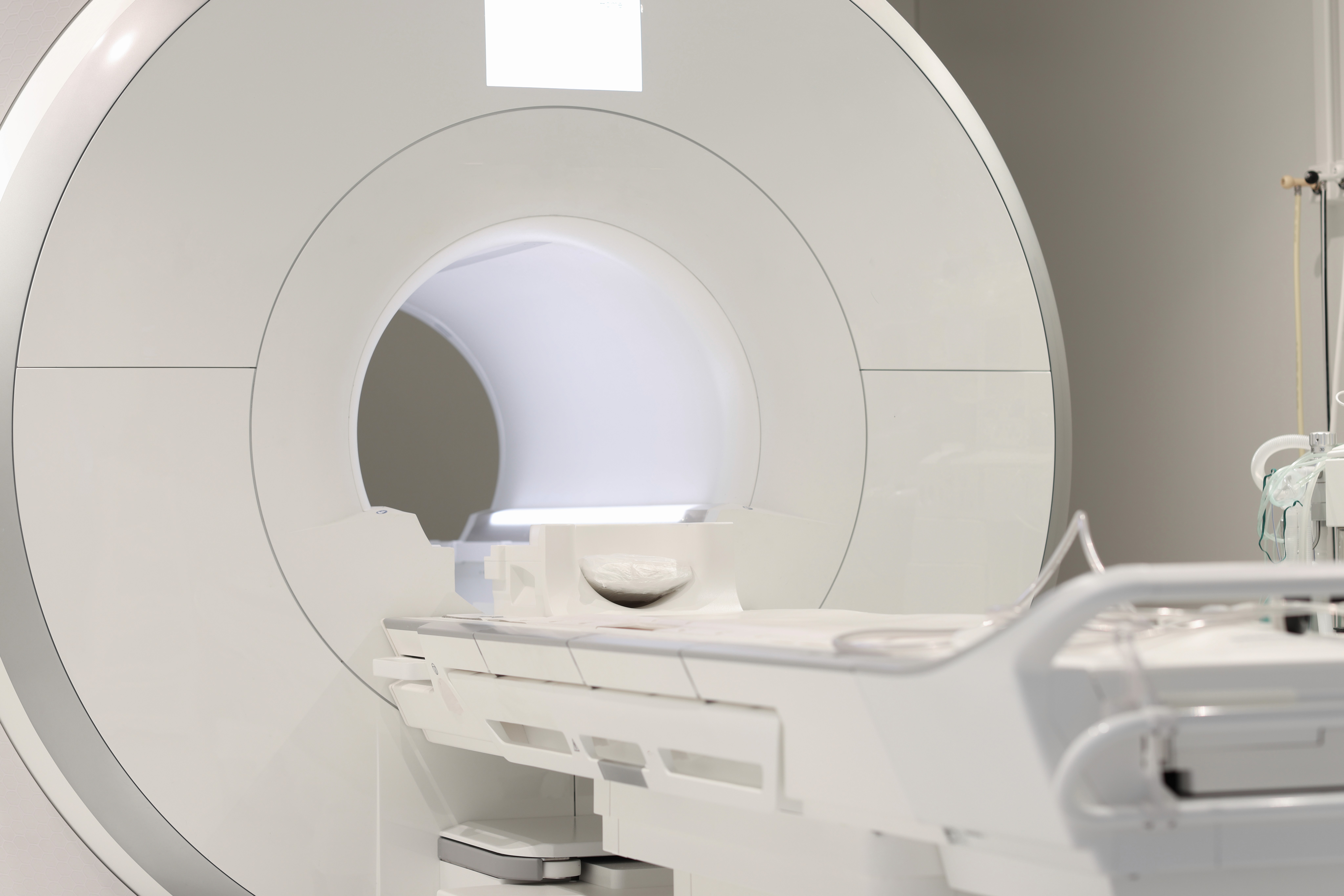
MRI (Magnetic Resonance Imaging) is an advanced diagnostic method that enables detailed visualization of organs and tissues in the body without the use of radiation. It can be safely used for the evaluation of the brain, spine, joints, musculoskeletal system, abdomen, and soft tissues.
The imaging process is conducted with the aid of strong magnetic fields and radio waves, playing a critical role in the diagnosis, monitoring, and treatment planning of diseases.
Contrast-Enhanced MRI
Contrast-Enhanced MRI is performed to obtain clearer and more detailed images for certain conditions by administering a contrast agent intravenously. This method is particularly preferred for the evaluation of tumors, vascular diseases, infections, and certain inflammatory conditions.
The contrast agent highlights differences between organs and tissues, allowing for more accurate diagnosis. Before the procedure, the patient's kidney functions and medical history are assessed by a physician.
MRI with Anesthesia
MRI with anesthesia is a preferred imaging method for patients who find it difficult to remain motionless for extended periods, have a fear of enclosed spaces (claustrophobia), or are pediatric patients. In this method, sedation or general anesthesia is administered under the supervision of an anesthesiologist during the MRI procedure.
Through MRI with anesthesia, patient comfort is enhanced while the quality of the images is maintained at an optimum level. Necessary anesthesia evaluations are conducted before the procedure, and the patient is observed for a short period afterward.