


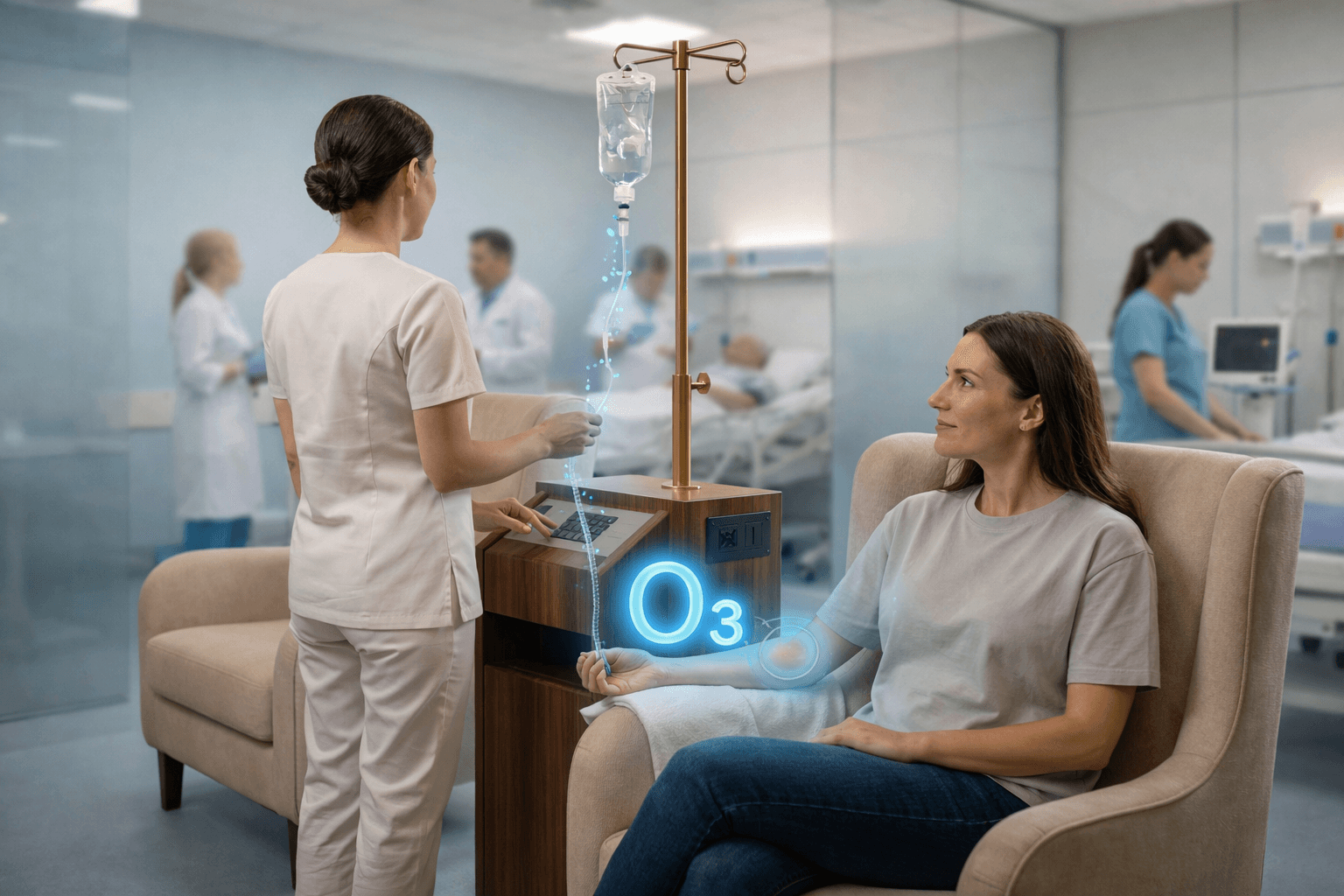
Ozone therapy is a complementary treatment method based on the principle of administering ozone gas, the active form of oxygen, to the body in specific doses and in a controlled manner. Medical ozone applications are performed using modern devices and are planned specifically for each patient.
What is Medical Ozone?
Medical ozone is obtained by converting pure oxygen into an ozone-oxygen mixture through specialized medical devices. The ozone used in treatment is not a gas that is inhaled directly; it is administered under medical supervision using defined application methods.
The doses administered are tailored to the individual and the treatment process is conducted under the supervision of a specialist physician.
In Which Areas is Ozone Therapy Used?
Ozone therapy can be applied as a supportive and complementary method in the following conditions:
Support of the immune system
Increasing the body's resistance to infections
Circulatory disorders
Support for wound healing
Diabetic foot and chronic wounds
Joint and muscle pains
Migraine and headaches
Fibromyalgia
Supportive treatment in asthma and respiratory diseases
Skin problems and anti-aging applications
How is Ozone Therapy Applied?
The treatment method is determined according to the patient's overall health status, age, and treatment goals. The most commonly used application methods are:
Major autohemotherapy (administration with blood)
Local ozone applications
Ozone-infused serums and injections
Ozone-infused oils
The number and frequency of sessions are planned individually. Typically, they are applied as 1-2 sessions per week.
Is Ozone Therapy Safe?
Medical ozone therapy is a safe method when applied under the correct dose, the correct method, and the supervision of a specialist physician. The modern devices used during treatment allow for precise dose adjustments.
Ozone gas is not inhaled directly. Therefore, applications must be carried out in healthcare facilities and under medical supervision.